
Now that you understand the basics of what a trust is and how there are different types of trusts, it’s important to know that creating a trust is only the first step. There’s another crucial part of the process that often gets overlooked, and it’s called trust funding.
What is Trust Funding?
Trust funding means placing your assets inside the trust or ensuring that your assets are directed to the trust after your passing. If you fail to do this, your property may still go through probate court, even if you have a fully executed trust. Ensuring that these assets get their title transferred to the trust is usually done on the client’s end with supervision from the attorney to ensure that it is done properly.
How you fund your trust after signing the paperwork, executing the trust, depends on the assets you wish to transfer in. For example, financial accounts are often retitled through the bank and transferred into the trust's name, whereas a piece of property may require a new deed in the trust’s name. Your attorney will help you take the proper steps and guide you on what's best for your assets. In most instances, it is the client’s responsibility to complete the follow-up steps to transfer your assets so that the trust can do its job.
Why Does it Matter?
Let me give you an example. I once worked with a client who has been stuck in probate litigation for seven years. He and his siblings are in a legal battle over their late father’s real estate. What’s frustrating is that their father actually had a trust. But here’s the issue—he never transferred the real estate into the trust. Because of that, the property had to go through probate, which is exactly what he was trying to avoid.
This is why I cannot stress enough how important it is to properly fund your trust. This is done when bank accounts, property, and other assets are placed into the trust. If you do not place your assets into the trust or ensure they are directed there upon your death, all the work you did in setting up your estate plan could be meaningless.
Here is a Chart to Help You Keep Track of the Trust Funding Process:
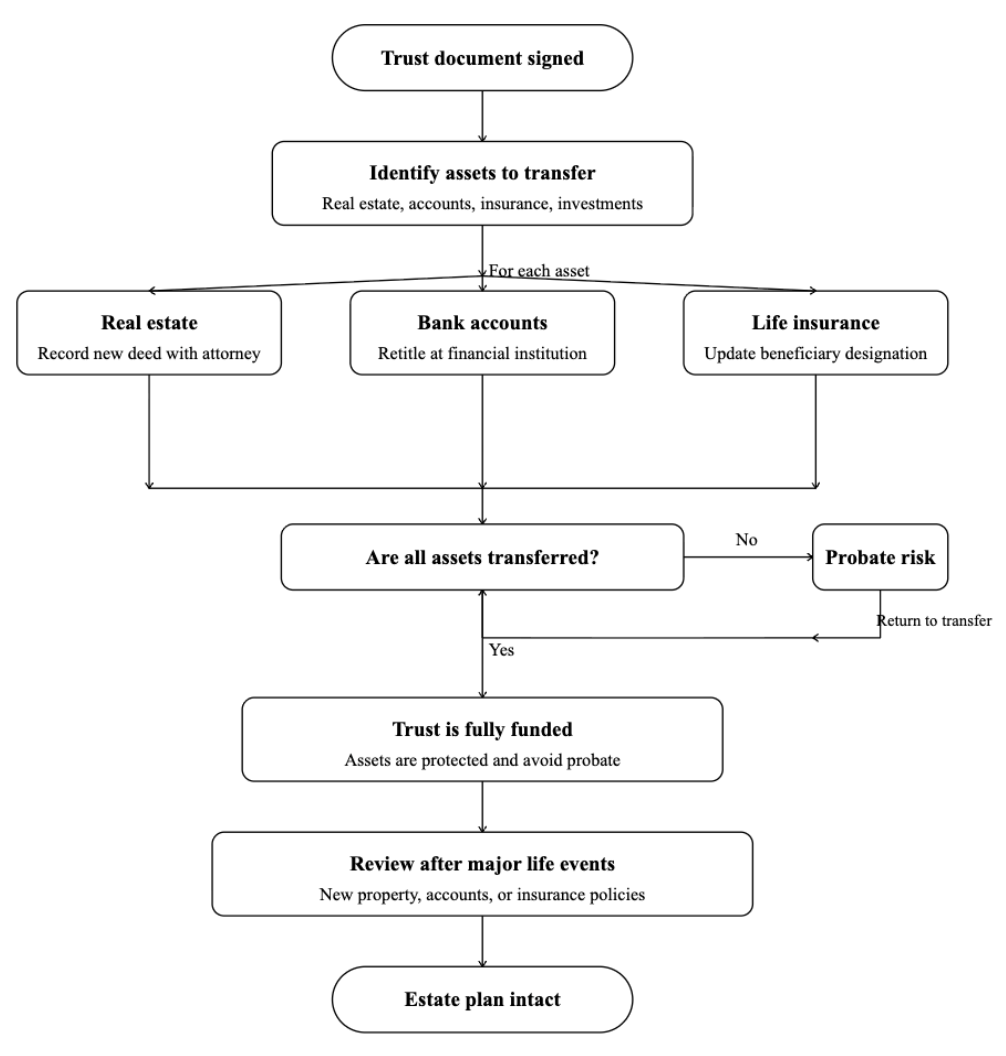
Trust Funding Flowchart
Want to learn more about properly funding your trust to avoid probate?
I help families create thoughtful, legally sound estate plans that actually work the way they’re intended to. If you’ve already set up a trust or are thinking about creating one, it’s critical to make sure your assets are properly funded into the trust. If you have questions about trust funding or want to review your existing plan to ensure everything is in place, I can help you understand your options and avoid common mistakes. Whether you're just starting out or want peace of mind that your plan is complete, click the link below to schedule a call with me today. I’m always happy to help.
To learn 80% of what you need to know about estate planning in less than 30 minutes, check out my full-length video. It’s a quick and comprehensive guide to help you understand the basics and start taking steps to secure your future.
Explore My Answers to Frequently-Asked Estate Planning Questions:
1. How do I avoid probate court?
3. What Are the Steps Involved in the Estate Planning Process?