
Should I have a Revocable Trust or an Irrevocable Trust?
Revocable vs. Irrevocable Trust: Which One is Right for You?
One of the most common questions I hear from clients when they first consider estate planning is:
“Should I have a revocable trust or an irrevocable trust?”
For most people, a revocable trust is the best option. But to fully understand why, let’s break down the key differences between these two types of trusts and when each one makes sense.
What is a Revocable Trust?
A revocable trust is a flexible estate planning tool that allows you to:
✔ Maintain control over your assets – You can modify or revoke the trust at any time during your lifetime.
✔ Access trust assets – Any assets placed in the trust remain available for your use.
✔ Act as your own trustee – You can manage the trust yourself, ensuring full control over decisions.
This makes a revocable trust an excellent option for those who want to avoid probate, keep their estate plan private, and maintain control of their assets while ensuring a smooth transition for their beneficiaries.
What is an Irrevocable Trust?
An irrevocable trust, on the other hand, operates under much stricter rules. Once you transfer assets into an irrevocable trust, you:
✘ Can no longer access those assets
✘ Cannot serve as the trustee
✘ Generally cannot use those assets for your personal benefit
Since irrevocable trusts come with significant restrictions, they are typically used in specific situations, such as:
Nursing Home Protection – A client may place their home in an irrevocable trust to shield it from long-term care costs while naming an adult child as trustee.
Asset Protection – If you have assets you don’t want in your name or don’t want your children to own outright, an irrevocable trust may provide a solution.
Tax and Estate Planning Strategies – For high-net-worth individuals, an irrevocable trust can help reduce estate taxes or protect assets from creditors. Transferring assets into an irrevocable trust minimizes the value of the taxable estate, potentially saving thousands of dollars in taxes.
Irrevocable trusts are generally inflexible. While there are some exceptions, carve-outs, and “escape hatches” that allow for limited flexibility in an irrevocable trust, these are complex and should be discussed with an estate planning attorney.
Which Trust is Right for You?
For most people, a revocable trust is the best choice because it provides flexibility, control, and ease of access. However, if you have specific concerns, such as protecting assets from nursing home costs, an irrevocable trust may be necessary.
Take these two clients, Andrew and Molly. Andrew is married, owns a home, has adult children, and wants an estate plan that transfers to his family as efficiently as possible. Andrew wants to stay in control of his finances and has no concerns about long-term care costs. For Andrew, a revocable trust is the right choice because it allows him to manage his assets as he always has while avoiding the delays and costs of probate for his family.
Molly, on the other hand, is in her late fifties and has spent her life building a company valued at several million dollars. While she does not plan to sell the business, she is aware that she may subject her trustees to significant estate taxes upon her death. By transferring the ownership of the business into an irrevocable trust now, she can remove that value from her taxable estate. This will potentially save her estate thousands of dollars in taxes. While she has to relinquish direct control over those assets now, the long-term tax savings her family would otherwise owe is far greater.
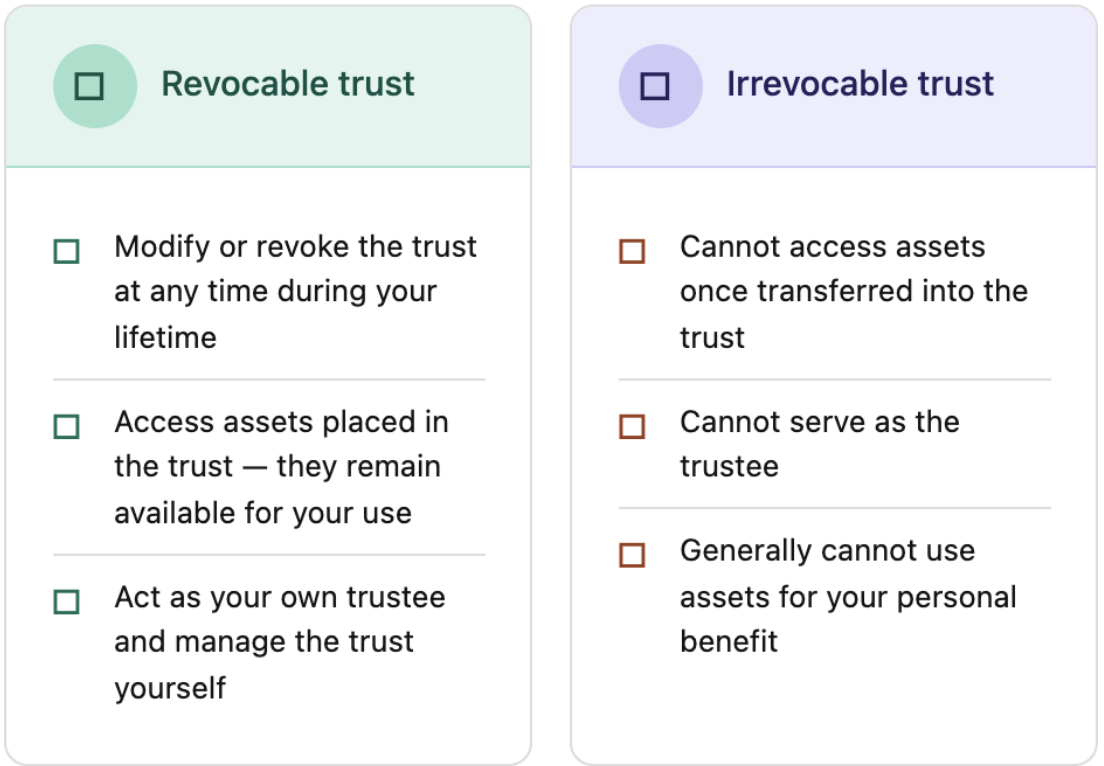
Checklist Comparison or a Revocable and Irrevocable Trust.
Learn More:
To learn 80% of what you need to know about estate planning in less than 30 minutes, check out myfull-length video. It’s a quick and comprehensive guide to help you understand the basics and start taking steps to secure your future.
If you’re unsure which trust fits your needs, or would like me to review or create a trust for you, then click this link - https://calendly.com/perennialtrust - to schedule a call with me today - I’m always happy to help!
Explore My Answers to Frequently-Asked Estate Planning Questions:
1. Drafting a Trust for Minor Children
2. What are the 4 core documents of estate planning?
3. Should You Have a Joint Trust or Separate Trusts With Your Spouse?